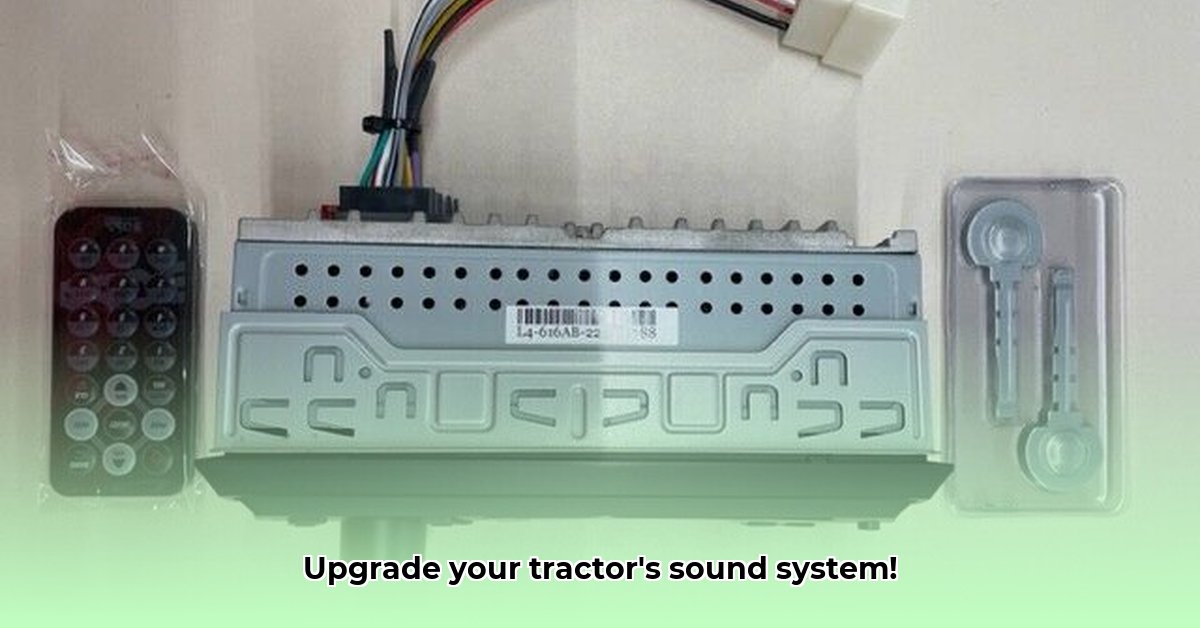
Long days in the field demand more than just reliable machinery; they require a reliable companion for communication and entertainment. A quality tractor radio can significantly improve your workday, offering music, news, and vital communication links. However, navigating the diverse market of tractor radios can be challenging. This guide simplifies the process, empowering you to choose the perfect audio solution for your tractor.
Understanding Your Needs: What's Your Ideal Tractor Radio?
Before exploring brands and models, define your priorities. Are you seeking a rugged, heavy-duty radio built to withstand harsh conditions, or a simpler, more affordable option? Consider these crucial factors:
Essential Features: Beyond basic AM/FM, what features are non-negotiable? Bluetooth for hands-free calling and wireless audio streaming? Auxiliary inputs for MP3 players or USB drives? Consider the convenience of integrated GPS or navigation systems offered by some OEMs (Original Equipment Manufacturers). Do you frequently work in dusty or wet conditions? A higher IP rating (like IP66 for dust and water resistance) is crucial for durability.
DIN Sizing: The size of your radio's faceplate is standardized using the "DIN" system. Ensure your chosen radio matches your tractor's dashboard opening to avoid compatibility issues.
Budget: Prices vary widely depending on brand, features, and durability. Establish a realistic budget before you begin your search.
Exploring the Market: Top Tractor Radio Brands
Several manufacturers specialize in durable and reliable tractor radios. Popular choices include Farm Radio Supply (FRS), REI, Jensen HD, and radios offered directly by OEMs like John Deere and Case IH.
Farm Radio Supply (FRS) is often praised for its user-friendly, "plug-and-play" installation and exceptional customer support, frequently featuring direct interaction with knowledgeable representatives opposed to automated systems. REI and Jensen HD are other reliable brands, often found through agricultural equipment dealers. OEM radios, while typically more expensive, offer seamless integration with your tractor's dashboard and electronics.
Direct price comparisons require further research due to the variability in models and features, but generally, OEM radios are at the higher end of the price spectrum, while FRS offers competitive pricing.
Choosing the Right Radio: A Step-by-Step Guide
Assess Your Needs: List your essential features and desired level of durability. Determine your budget.
Research Brands: Compare the features, durability ratings (IP ratings), and customer reviews of FRS, REI, Jensen HD, and OEM options. Check for warranties and readily available customer support.
Check Compatibility: Verify the DIN size and electrical system compatibility with your specific tractor model. Consult your tractor's manual or your dealer for specifications.
Compare Prices: Obtain price quotes from different suppliers, accounting for potential installation costs.
Make Your Purchase: Order your chosen radio from a reputable supplier.
Installation: Follow the manufacturer's instructions carefully, prioritizing safety. Disconnect the battery before any electrical work. Consider professional installation if you're uncomfortable with electrical wiring.
Installing Your New Tractor Radio: A Practical Guide
While many radios boast plug-and-play installation, careful preparation is key.
Step 1: Safety First! Always disconnect your tractor's battery before starting any electrical work.
Step 2: Removing the Old Radio (if applicable): Carefully remove the existing radio, taking photos to aid reassembly.
Step 3: Mounting the New Radio: Ensure the correct DIN size and secure fit.
Step 4: Wiring the Radio: Connect the radio's wiring harness to your tractor's harness. Color-coded wiring simplifies the process. Consult the wiring diagrams provided with your radio.
Step 5: Testing Your New Radio: Reconnect the battery and test all functions thoroughly.
Step 6: Troubleshooting: If you encounter issues, check connections, fuses, and refer to the radio's manual before seeking professional help.
Maintaining Your Tractor Radio: Tips for Longevity
Regular cleaning with a damp cloth is sufficient to remove dust and dirt. Avoid harsh chemicals. Periodically inspect wire connections for looseness or damage. Addressing minor issues early prevents more significant problems down the line.
Troubleshooting Common Issues: Quick Fixes and When to Call a Professional
- No Power: Check fuses, battery connections, and all wiring.
- No Sound: Ensure the volume is up, the correct input source is selected, and speakers are securely connected.
- Static Interference: Check the antenna connection. Environmental factors may also play a role.
If simple troubleshooting fails, consult your owner's manual or a qualified technician.
Conclusion: Choosing the Right Radio for Your Needs
The ideal tractor radio enhances both productivity and enjoyment. Prioritize your needs, budget, and installation comfort level when selecting your radio. Thorough research and careful installation ensure years of reliable performance.